
The short answer
Rent out a paddleboard only when the board and its complete setup suit the intended paddler and conditions. Decide whether you will hand it over ready to use or packed for transport, inspect the board and accessories, price the preparation work and confirm the necessary safety arrangements. A pump, fin or properly sized life jacket can be as important to the rental as the board itself.
Start with the board’s intended use.
An all-around board, narrow touring board and surf-focused board are different rental offers. Identify the exact model, dimensions, construction and manufacturer’s load guidance. Explain what sort of use it is designed for instead of describing every board as beginner-friendly.
Ask about the intended paddler, their experience and the planned location. Manufacturer capacity information does not automatically mean every person below that limit will find the board stable or appropriate. Do not advertise passenger use unless the board is designed for it.
Choose a board you understand well enough to prepare and explain. If its maintenance history is uncertain or it has a suspected leak, damaged fin box or structural problem, resolve that before considering a booking.
Choose an inflated or packed handoff.
Transport convenience and setup work move together. A packed inflatable may fit in a smaller vehicle, but it transfers assembly, inflation and packing tasks to the renter. A board handed over ready to use still needs a suitable way to reach the water.
| Format | Owner prepares | Confirm with renter |
|---|---|---|
| Rigid board | Board, fin and complete accessory kit. | Suitable carrier or permitted water-access handoff; correct loading method. |
| Inflatable, ready to use | Inflation and checks to manufacturer guidance, fin and accessories. | Transport, handling and instructions for pressure and changing conditions. |
| Inflatable, packed | Board, compatible pump, working gauge, fin, hardware, bag and instructions. | Ability to assemble, check, use, dry and pack the setup correctly. |
Choose one clear offer rather than leaving the format to pickup-day negotiation. If the renter is unfamiliar with the setup, offer an appropriate demonstration or a different arrangement. Do not assume a packed board is ready to rent just because everything fits in its bag.
Make every part of the kit visible.
List exactly what is included and count it before and after each booking. A missing fin screw can spoil the outing just as effectively as a missing paddle.
- Board and fin: correct fin, attachment system and all required hardware.
- Paddle: usable adjustment mechanism, secure sections and suitable fit.
- Inflation equipment, when needed: compatible pump, hose and reliable gauge, with the manufacturer’s instructions.
- Safety equipment: an appropriate life jacket and other equipment required for the intended waters and use.
- Leash arrangement: appropriate to the environment and paddler, with instructions they understand.
- Transport and storage items: bag or supplied carrier components, if included, each described accurately.
Keep small parts together in a labeled pouch. Photograph the actual kit laid out, then use that image as a counting reference rather than relying on “all accessories included.”
Inspect the board in its usable condition.
Follow the board manufacturer’s inspection and care instructions. For a rigid board, examine the deck, rails, underside and fin box for impact damage or signs of water intrusion. For an inflatable, check seams, valve, surface and fittings, then inflate and assess it as instructed. Do not guess a universal pressure value; use the instructions for that model.
Check the fin attachment and paddle, including locking and adjustment mechanisms. Keep damaged or questionable equipment out of service. Cleaning the surface does not fix a leak or loose attachment.
A paddleboard photo plan
Show the full board, deck pad, underside, fin attachment and model information. Add one photo of the complete kit and one showing the handoff format: inflated, rigid or packed. Photograph existing cosmetic marks clearly.
Use your own equipment photos for the listing. Stock photos on an educational guide do not show what a renter will receive.
After use, remove debris, clean and dry the board and accessories according to their instructions. Pay attention to moisture in the bag and sand around valves and fittings. Build enough turnaround time into the calendar to do this properly. The Journal’s inspection checklist provides a broader record-keeping routine.
Match the setup to the water and the paddler.
A life jacket and leash serve different purposes. A leash is not a substitute for an appropriate wearable life jacket, and the right leash arrangement depends on the environment. The American Canoe Association’s leash guidance explains the entanglement risk in moving water and the importance of appropriate quick-release arrangements. Do not send someone onto moving water with a generic ankle-leash instruction.
In Florida, consult FWC’s human-powered vessel guidance for life jackets, sound devices and other requirements. These rules depend on where and how the board is used. Prepare for the actual trip rather than assuming a beach photograph describes every possible outing.
Discuss wind, weather, currents, route and return arrangements before handoff. Use the National Weather Service’s safe-boating preparation guidance to identify the relevant forecast and observations. A calm-looking shoreline does not tell you what conditions will be later or farther out.
If a renter lacks the skills for the intended conditions, recommend qualified instruction or an outfitter that can provide it. A rental handoff is not a full paddling lesson. Be willing to pause an unsuitable or unsafe rental.
Price the setup and turnaround work.
Compare boards of similar type with the same rental duration and handoff format. A board collected packed from a home and one delivered ready to paddle offer different convenience. Do not copy an on-water outfitter’s rate without considering what their service includes.
Illustrative preparation comparison
The same board can involve different work.
Suppose a packed rental takes 20 minutes to check, pack and explain, plus another 20 minutes at return to inspect and put away. That is 40 minutes of owner time before messaging or any delivery.
If a different format adds 25 minutes of inflation, setup or extra handling, the same rental price leaves less for your time. At a hypothetical time value of $20/hour, those additional 25 minutes represent $8.33. Measure your own routine; this is not a suggested rental rate.
Include cleaning, wear, accessory replacement, applicable charges and fixed costs. Use the general pricing worksheet for the calculation, and the Journal’s watercraft pricing article for more comparison context.
Demonstrate the parts the renter will operate.
Before arrival, confirm transport, the handoff format, intended location and correctly sized safety gear. At pickup, count parts together and show the fin installation, paddle adjustment and any inflation steps the renter must perform.
For an inflatable, point to the correct pressure instructions and explain model-specific handling, temperature, storage and packing guidance. Do not encourage unattended inflation, improvised pump connections or guesses about pressure. Use the actual manufacturer’s directions.
Agree on return time, location and what to do if the board loses pressure, equipment is missing or the weather changes. At return, check the kit before the renter leaves when practical, document changes and inspect again during cleaning. Keep the next booking blocked if anything needs attention.
Check insurance and local rental responsibilities.
Insurance is the owner’s responsibility.
Local Rentz does not provide insurance for rentals on its platform. Equipment owners are responsible for obtaining any insurance coverage they need. Check with your insurance provider before listing, because personal insurance policies may not cover equipment rented to others.
Florida owners should review FWC’s livery rules, including applicable permit, instruction and agreement requirements. Renting one personal board does not automatically make the activity exempt. Elsewhere, check with the relevant boating authority and the operator of your handoff location.
Use the booking’s actual cancellation and return terms. Photograph condition and record concerns factually; those records do not guarantee reimbursement. Read the Local Rentz terms and get advice on responsibilities specific to your operation when needed.
Describe the complete offer on Local Rentz.
Start at List your stuff and follow the current sign-in and listing steps. Choose the paddleboard category, identify the actual board and add your kit photos. Specify the handoff format, transport needs and included equipment before setting prices and availability.
Block dates for your own paddling and turnaround work. When a request arrives, confirm that the planned use and logistics fit the board and service you offer before accepting it.
Put it into practice
Your paddleboard-readiness checklist
- Model, dimensions, intended use and manufacturer limits verified.
- Board inspected in its usable condition; no unresolved leaks or structural issues.
- Fin, hardware, paddle, pump and bag counted and checked as applicable.
- Handoff format clearly stated and suitable transport confirmed.
- Appropriate life jacket, leash arrangement and other required gear confirmed for the outing.
- Forecast, intended location, access permissions and applicable rental rules checked.
- Setup demonstration, condition photos and return procedure prepared.
- Cleaning and drying time allowed before the next booking.
Common owner questions
Can I rent out an inflatable paddleboard?
Yes, if it is suitable and properly maintained. Specify whether it is handed over inflated or packed, include the equipment required for that format, and confirm the renter can follow the manufacturer’s setup instructions.
What pressure should I tell the renter to use?
Use the instructions and limits for the exact board and pump. Do not copy a pressure number from another model or a general online guide.
Is any leash suitable for a rental?
No. Leash choice and use depend on the water environment and paddler. Moving water can create entanglement hazards. Use authoritative guidance and qualified instruction when you cannot confidently assess the arrangement.
Does Local Rentz insure my paddleboard?
No. Local Rentz does not provide insurance for rentals on its platform. Equipment owners are responsible for obtaining any insurance coverage they need. Check with your insurance provider before listing, because personal insurance policies may not cover equipment rented to others.
Sources & further reading
Checked November 4, 2026. Confirm current requirements and use the instructions for your own equipment.
- ACA: SUP leashes and environments
- FWC: Human-powered vessel equipment
- FWC: Livery requirements
- NWS: Prepare before boating
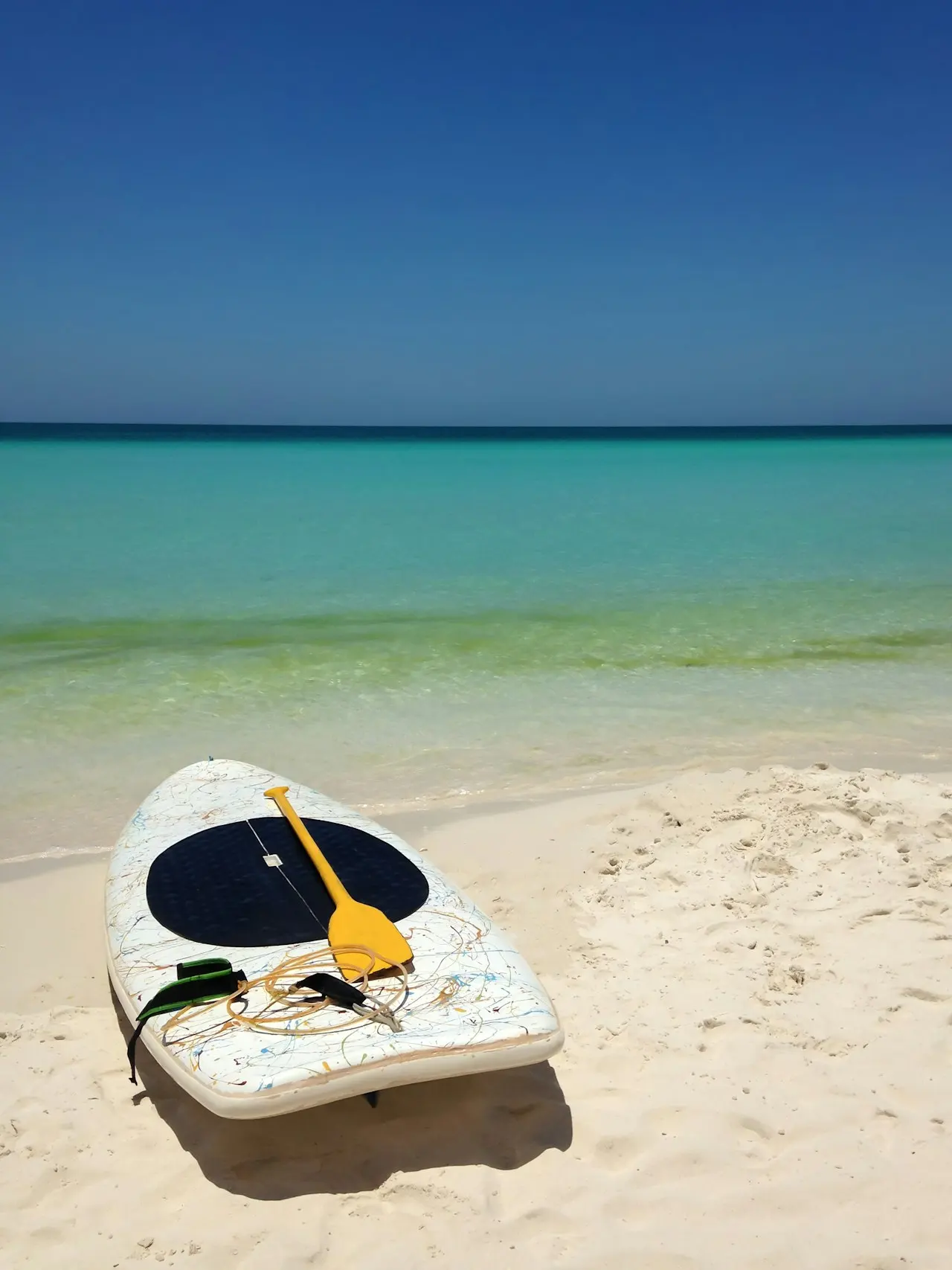
Photo: Andrea Stuart / Unsplash, under the Unsplash License. Illustrative photo, not a Local Rentz listing.